
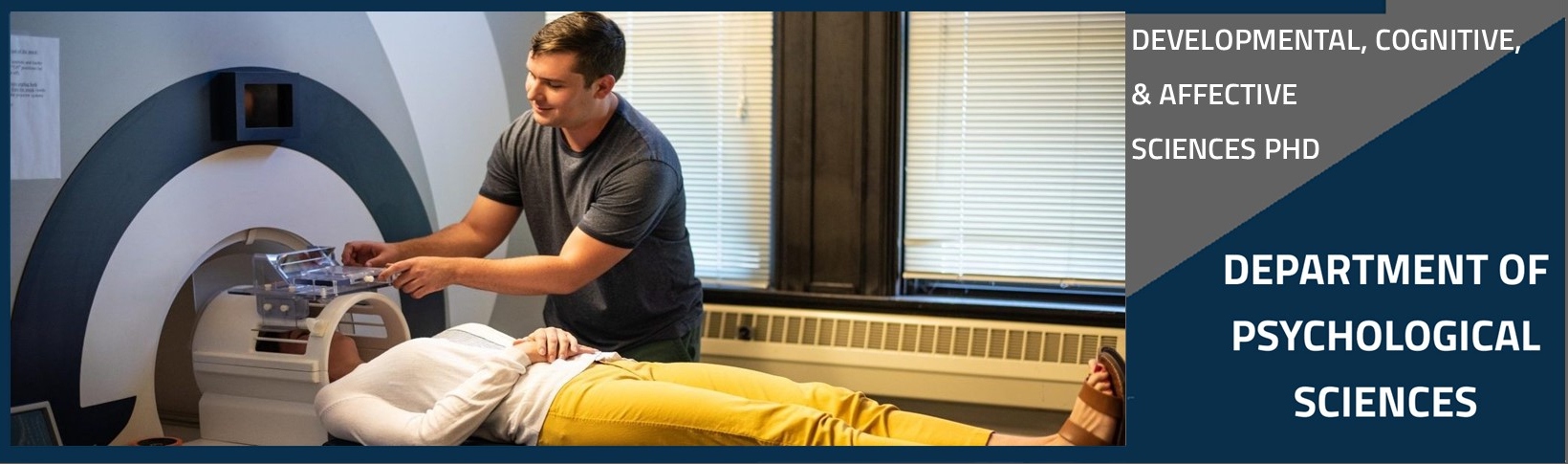
This program will soon be accepting applications for the 2027-2028 academic year
Welcome to the Developmental, Cognitive, and Affective Sciences Program.
We offer a unique PhD experience. Students in the Developmental, Cognitive, and Affective Sciences (DCAS) PhD program choose one of the following tracks: developmental psychology, cognitive psychology, or affective science. Students concentrate on research while working closely with a faculty mentor. We prepare students for research and teaching careers applicable to academia and beyond.
Learn about the program, including the three research tracks from which to choose and what each year of the program will entail.
Learn about the DCAS program faculty, including their past and current research.
Learn about applying to the program, including a link to the application.
Learn about the tuition and financial aid we typically offer.
Learn about our commitment to diversity.
Learn about our wellness initiatives for graduate students.
DCAS News and Highlights

Dr. Obeid publishes study on “Impaired Fine Motor Skills in Developmental Dyslexia”
Case Western Reserve University’s Department of Psychological Sciences Assistant Professor Rita Obeid recently published a study in the Journal of Speech, Language, and Hearing Research. The study, titled “Impaired Fine Motor Skills in Developmental Dyslexia: A Bayesian Meta-Analysis of 5 Decades of Research” features insights from: Rita Obeid, Assistant Professor...

Case Western Reserve University named among world’s top universities by TIME
TIME magazine named Case Western Reserve among the world’s best universities, placing the institution 25th globally in its World’s Top Universities of 2026 ranking. The recognition ranks Case Western Reserve among a select group of institutions worldwide identified for long-term impact on students and society. Unlike rankings that emphasize admissions...
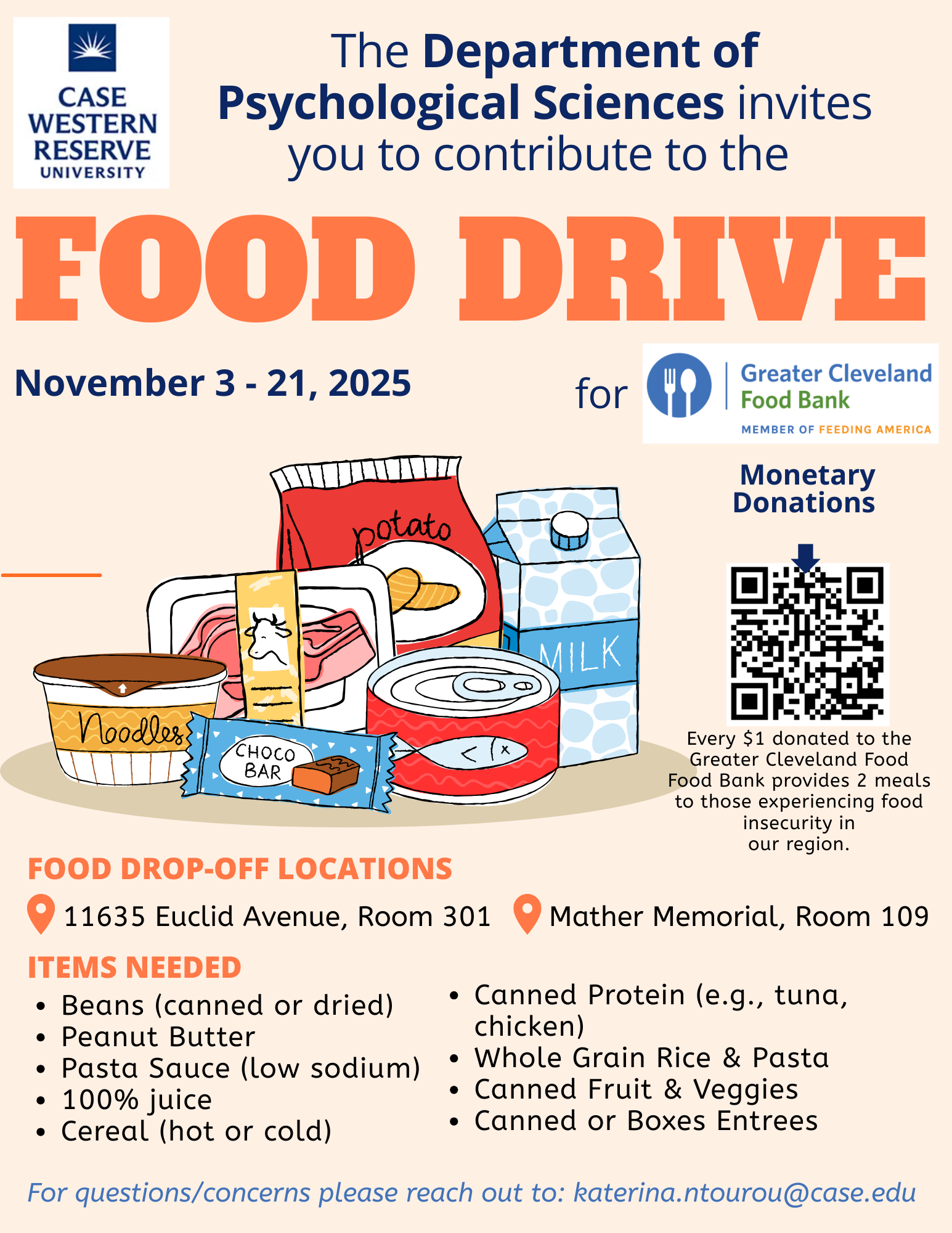
PTSD depression research study offering therapy
The PTSD Treatment and Research Program at Case Western Reserve University is looking for people ages 18-65 who have experienced a stressful life event and are experiencing symptoms of PTSD or depression. Such stressors might include loss of a job, sexual assault, end of a serious relationship, physical assault, or loss...
Research Study Opportunity: Understanding Parent-Child Connections in Autism
The Neurodevelopment Research Lab at CWRU is inviting caregivers to participate in a research study at CWRU focused on understanding how families of children with autism interact, connect, and support one another. Help us learn what makes families stronger – and how we can better support yours. Participants: Parents &...
WE’RE HIRING! Developmental Psychology Assistant Professor Position
For more information and to apply: https://apply.interfolio.com/153281. Review of applications begins November 1, 2024, and will continue until the position is filled.

Elizabeth Short participated in a panel discussion on countering learned helplessness.
PBS: Psychological sciences' Elizabeth Short participated in a panel discussion on countering learned helplessness. She discussed how parents can help their children overcome challenges. She is introduced at the 9:41 mark in the video.
Spring 2024 SchubertCenter@Intersections Winners!
On behalf of our Schubert Center Director, Anastasia Dimitropolous, and the Schubert Center team, we would like to express our appreciation for your help with the SchubertCenter@Intersections competition on April 19, 2024. Your thoughtful assessments allowed us to award prizes to deserving students, supporting individuals whose work will benefit children and adolescents...
A new paradigm for adult ADHD: A focused strategy to monitor treatment
Psychological sciences’ Elizabeth Short wrote an article titled, A new paradigm for adult ADHD: A focused strategy to monitor treatment, which appeared in Cleveland Clinic Journal of Medicine. Short explores the act of task incompletion as the main dysfunction in adults with ADHD.